
 NNAIRE
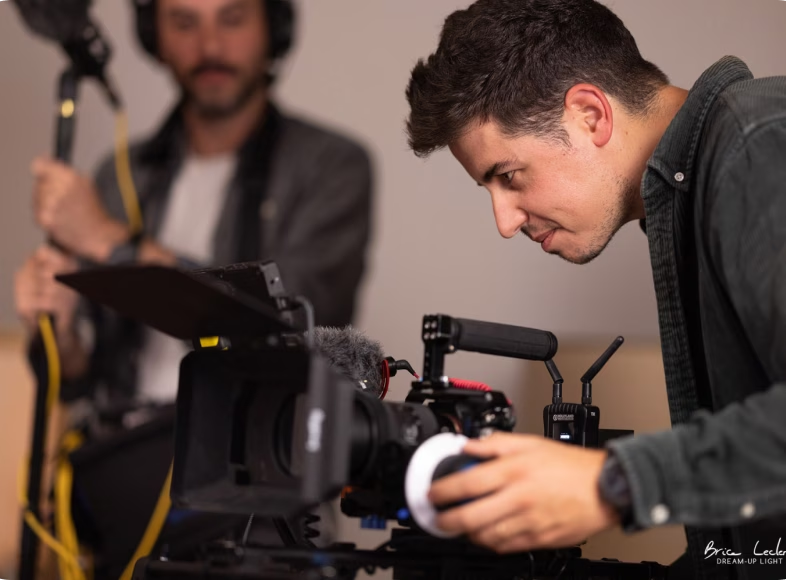
For a long time, the vast majority of scientific, historical or cultural narratives have highlighted men, leaving women in the shadows.
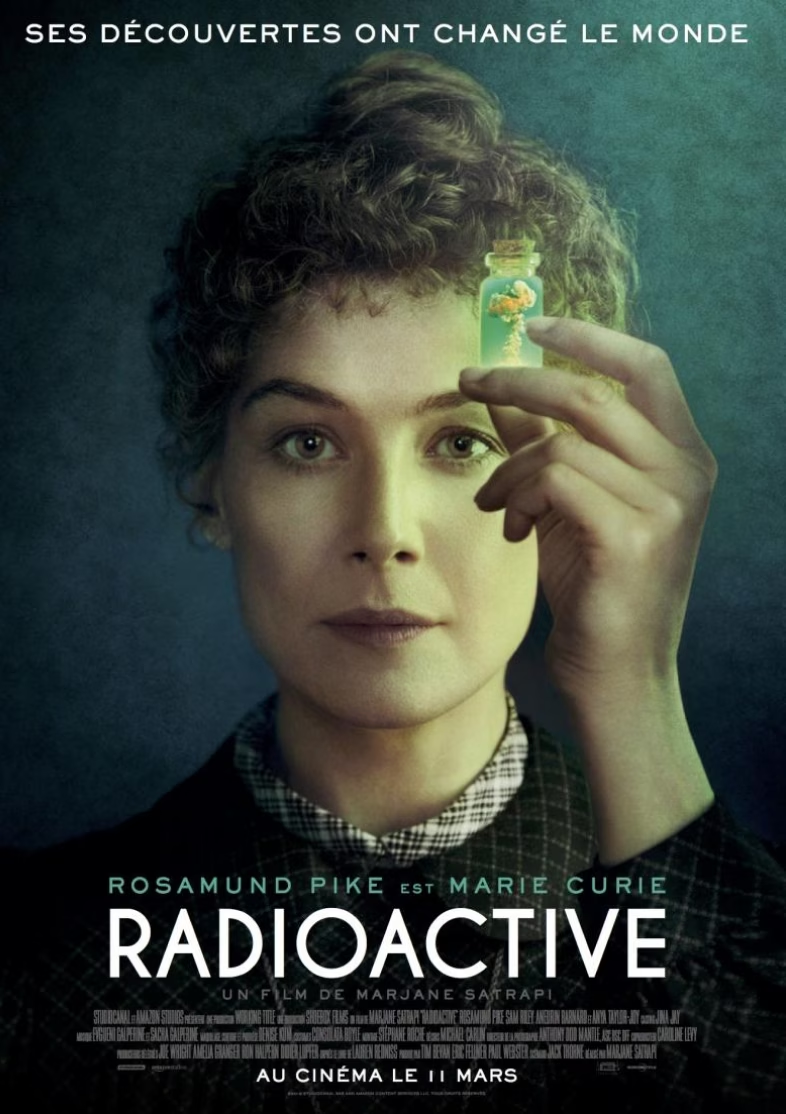
Today, cinema and series play an essential role in the rehabilitation of these forgotten figures: they make their faces, their voices and their contributions visible. The image becomes a tool of symbolic justice, capable of reaching a wide audience where history textbooks had not always succeeded.
Restoring Collective Memory
Between Emotion and Knowledge
Through staging, testimony and fiction, these works make it possible to embody complex journeys: those of researchers, artists, activists, pioneers. The viewer discovers not only their genius, but also the social, political and sexist obstacles they had to overcome to exist. This sensitive and visual approach transforms science and history into human experiences, accessible to all.
Notable Examples



Conclusion
The film or series then becomes more than entertainment: it's a transmission tool, a means of education and an act of cultural reparation. By spreading these stories, we restore a balance and inspire new generations to believe that they too have their place in the history of knowledge.